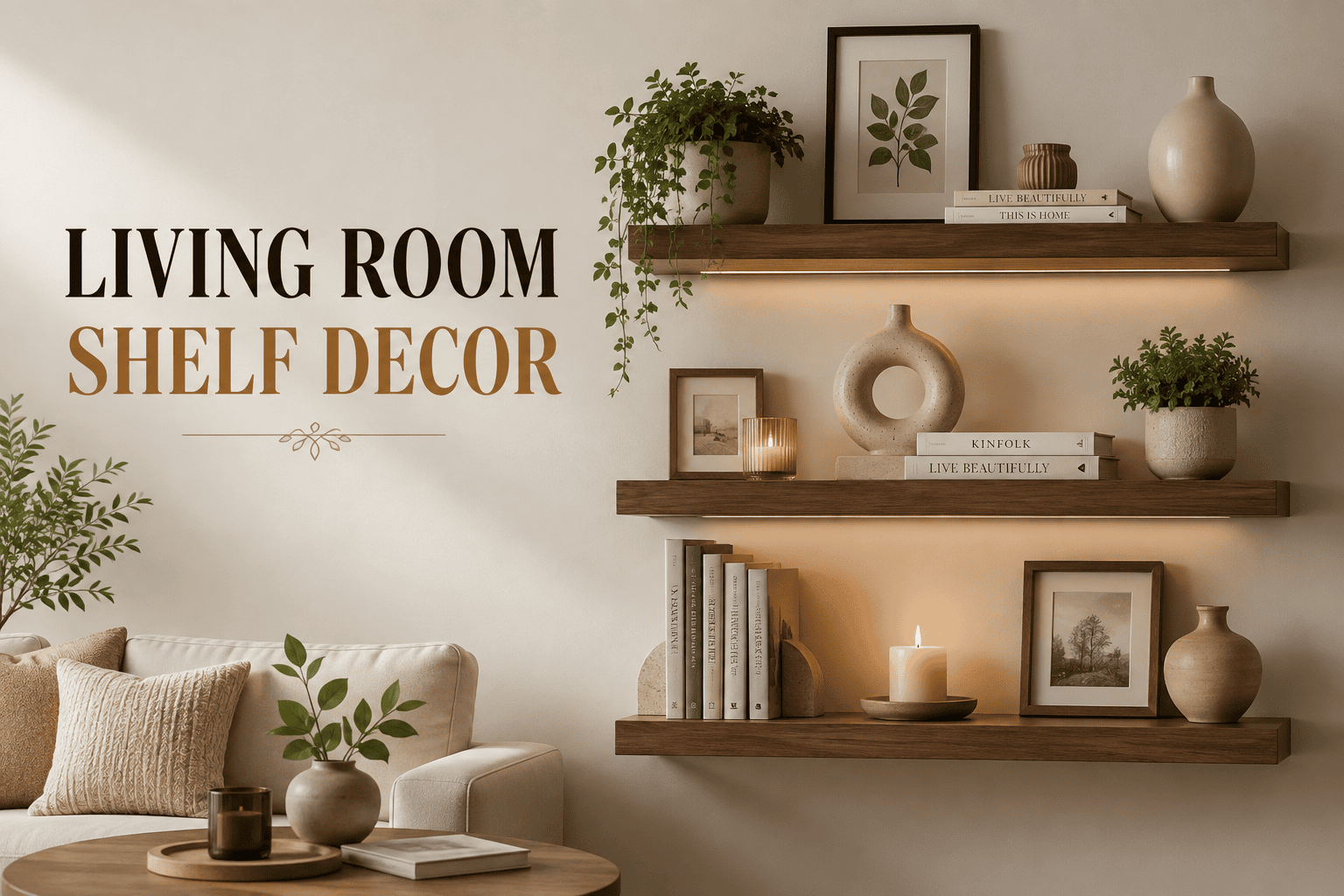
Learn how to decorate a large wall in living room spaces with 12 stylish ideas, smart sizing tips, layout advice, budget solutions, and 2026 trends.
A large blank wall can make an otherwise beautiful living room feel unfinished. The furniture may be comfortable, the rug may be perfectly chosen, and the lighting may create the right atmosphere, yet the room can still feel like something is missing. Learning how to decorate a large wall in living room spaces is mainly about finding the right balance between scale, proportion, color, texture, and personality.
The biggest mistake is assuming that a large wall simply needs more decorations. In many cases, adding several small frames or scattered accessories can actually make the wall look emptier because each individual item becomes visually insignificant. Current design guidance consistently emphasizes choosing decor with enough presence for the wall, while still leaving intentional breathing room.
If you are wondering how to decorate a large wall in living room areas without making the space feel cluttered, start by thinking about the wall as part of the entire room rather than as an isolated surface. The sofa, coffee table, rug, windows, fireplace, TV, ceiling height, and lighting should all influence your decision.
In how to decorate a large wall in living room guide, you will discover 12 practical ways to transform a large living room wall in 2026. You will also learn how to choose the right scale, how to decorate above a sofa, how to handle tall or extra-wide walls, and how to create an expensive looking result without covering every inch of the wall.
How to Decorate a Large Wall in Living Room: Start With the Right Plan

Before choosing artwork, mirrors, shelves, or paint, take a few minutes to study the wall. This simple step can prevent expensive decorating mistakes.
Measure the wall’s width and height, then note anything that interrupts the space. Windows, doors, fireplaces, electrical outlets, vents, televisions, and built-in features can all affect the final arrangement.
Next, look at the furniture closest to the wall. If you are decorating the wall behind a sofa, the sofa becomes one of the most important reference points. If there is a console, credenza, fireplace, or media unit below the wall, the width and visual weight of that furniture should influence the wall treatment.
This is one reason how to decorate a large wall in living room should never be treated as a simple shopping question. You are not merely choosing something attractive. You are creating a visual relationship between several elements.
A good large wall design normally has one dominant idea. That might be a dramatic piece of artwork, a gallery wall, a large mirror, built-in shelving, architectural paneling, or a strong wallpaper pattern. Smaller elements can support that main feature, but they should not compete with it.
in how to decorate a large wall in living room, Established design publications use the same principle. Homes & Gardens, for example, highlights artwork, shelving, wallpaper, mirrors, gallery arrangements, and paneling as different ways to give a large living room wall character while maintaining visual balance.
12 Ideas to Try in 2026
1. Hang One Oversized Statement Artwork

One of the easiest answers to how to decorate a large wall in living room spaces is oversized artwork.
A large painting, abstract canvas, photographic print, landscape, textile artwork, or framed artwork can give the wall an immediate focal point without requiring dozens of separate pieces.
This how to decorate a large wall in living room approach works particularly well if you prefer modern, minimalist, transitional, contemporary, or luxury interiors. Instead of spreading small objects across the wall, one substantial piece creates a clear visual destination.
The artwork should relate to the furniture below it. For example, if the wall is behind a long sofa, a horizontal artwork or wide composition can usually feel more connected to the furniture than a very small portrait-oriented print.
Scale is especially important here. Architectural Digest cites a common designer guideline of using artwork or a mirror that occupies roughly 60% to 75% of the sofa’s width. For a 100-inch sofa, that means a wall display around 60 to 75 inches wide can create a more balanced relationship.
That does not mean every living room must follow exactly the same measurement. Architecture, ceiling height, furniture proportions, and surrounding negative space all matter. However, the principle is useful: large furniture generally needs wall decor with enough visual weight to relate to it.
If you are unsure whether your artwork is large enough, create a paper or cardboard template of the approximate size and tape it to the wall. Stand across the room and view it from the normal seating position. This is a much safer way to judge scale before drilling holes or purchasing an expensive frame.
2. Create a Large Gallery Wall

A gallery wall is another excellent solution when learning how to decorate a large wall in living room interiors.
Instead of relying on one oversized artwork, you can combine family photographs, artwork, prints, illustrations, vintage pieces, mirrors, or other meaningful objects into one larger composition.
The key how to decorate a large wall in living room is to make the collection feel like one visual unit rather than a random collection of objects.
You can create a symmetrical grid if you prefer a structured, traditional appearance. Equal frame sizes and consistent spacing can give the wall a sophisticated architectural quality.
For a more relaxed look, use different frame sizes and shapes. The collection can feel more personal and collected when the pieces are not perfectly identical.
However, variety should still have some connection. You might repeat the same frame finish, use artwork with a shared color palette, or keep a consistent visual theme.
Before hanging anything, place the frames on the floor and experiment with the arrangement. Homes & Gardens specifically recommends planning gallery-wall layouts on the floor before putting holes in the wall.
Another useful approach is to use painter’s tape to mark the outer boundaries of the entire gallery. This lets you understand how much of the wall the finished arrangement will occupy.
When considering how to decorate a large wall in living room spaces with a gallery wall, remember that the gallery itself becomes one large piece of decor. Judge its total width and height rather than evaluating each frame individually.
3. Add an Oversized Mirror

A large mirror can completely change the character of an empty living room wall.
It is particularly useful when the room feels dark, visually heavy, or smaller than you would like. A mirror can reflect natural or artificial light and introduce another layer of depth.
An oversized rectangular mirror can work beautifully above a console or behind a sofa. A large round mirror creates softer contrast against furniture with strong straight lines.
For traditional or transitional interiors, consider a mirror with a detailed wood, brass, bronze, or painted frame. For contemporary spaces, a simple thin frame can keep the wall looking clean.
If you are trying to how to decorate a large wall in living room figure out how to decorate a large wall in living room spaces with an awkward layout, consider using two or three mirrors as a coordinated arrangement rather than forcing one enormous mirror into the space.
Homes & Gardens also recommends mirrors as a way to add dimension and reflect light, with the size and shape selected according to the available wall area and overall room style.
Be careful about what the mirror reflects. A beautiful mirror facing an attractive window, artwork, architectural feature, or light source can enhance the room. A mirror reflecting clutter, a blank hallway, or an unattractive utility area may have the opposite effect.
4. Install Floor to Ceiling Shelving or Built Ins
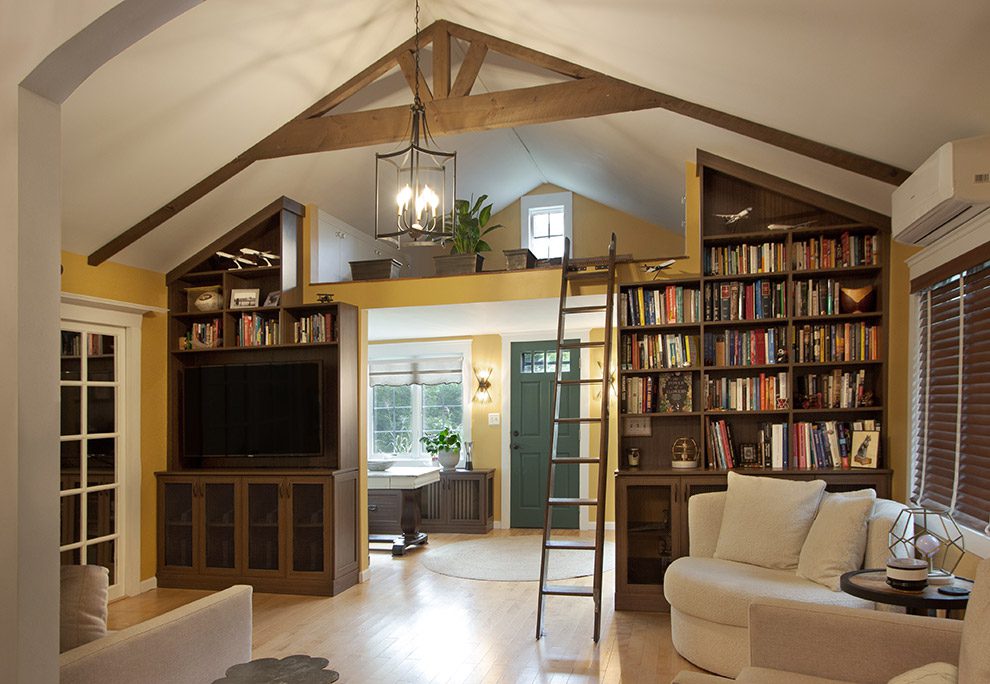
If your large wall needs to do more than look attractive, built-in shelving can combine decoration with storage.
A floor to ceiling bookcase can transform a blank wall into an architectural feature. It gives you space for books, framed photographs, ceramics, plants, collected objects, and decorative accessories while adding vertical structure.
This option works especially well in large American living rooms, great rooms, and open-concept homes where a wide empty wall can otherwise feel disconnected from the rest of the space.
The advantage of built-ins is that the wall itself becomes part of the room’s architecture. Instead of simply hanging objects against the wall, you create depth.
Homes & Gardens identifies wall to wall shelving as one of the effective ways to fill a large living room wall while also providing organization and display space.
When styling shelves, resist the temptation to fill every compartment. Leave some open space so the display can breathe. Mix vertical books with horizontally stacked books, artwork, ceramics, plants, and objects with different heights.
If you want additional living-room furniture inspiration before planning built-ins, you can explore Home Styling Guide’s guide to types of furniture for living room, which covers sofas, sectionals, console tables, bookcases, cabinets, media furniture, and other pieces.
5. Use Floating Shelves or Picture Ledges

Not every home needs expensive built-ins. Floating shelves and picture ledges can provide a similar layered effect with a lower commitment.
This is one of the most flexible approaches to how to decorate a large wall in living room spaces because the display can evolve over time.
Place two or three long shelves horizontally across the wall and style them with framed artwork, books, small plants, ceramics, candles, and decorative objects. You can also overlap framed art to create a more relaxed layered appearance.
Picture ledges are particularly useful if you frequently change your artwork. Instead of drilling a new hole every time you want to replace a print, you can simply slide another frame into the arrangement.
Wayfair also recommends shelving and picture ledges as practical solutions for large blank walls because they provide both visual interest and functional display space.
For a sophisticated look, avoid filling the shelves from end to end. Leave intentional gaps and vary the height of objects. The negative space will make the display feel curated rather than crowded.
Follow the ideas in how to decorate a large wall in living room 2026.
6. Create an Architectural Accent Wall With Paneling

If you want the wall itself to become the decoration, paneling can be a powerful solution.
Picture frame molding, board and batten, vertical slats, traditional wainscoting, or other architectural treatments can add depth without requiring a large collection of decorative objects.
This is especially effective when the room has a traditional, transitional, modern farmhouse, organic modern, or contemporary design direction.
For a classic American living room, painted picture frame molding can create a sophisticated backdrop for artwork. For a modern room, vertical wood slats can introduce warmth and texture.
Paneling also gives a very large wall a sense of structure. Instead of seeing one uninterrupted expanse of drywall, the eye sees organized sections.
Homes & Gardens notes that paneling can add layers and help accentuate a feature wall, while Wayfair similarly highlights wall paneling as a way to introduce structure and texture.
If you are planning to paint your paneling how to decorate a large wall in living room, test the color under both daylight and artificial light before committing. A color that looks soft in a paint store can appear considerably stronger across a large wall.
7. Transform the Wall With Paint or Wallpaper

Sometimes the best answer to how to decorate a large wall in living room spaces is not to hang anything at all.
A strong paint color or wallpaper pattern can turn the entire wall into a backdrop.
This approach is particularly effective when you want to create a focal wall without adding physical objects. Deep green, warm terracotta, muted blue, chocolate brown, charcoal, creamy beige, and other sophisticated shades can create different moods depending on the room’s lighting and furnishings.
If you want a dramatic effect, wallpaper can provide pattern and visual movement across the entire surface.
However, the goal should not simply be to make the wall noticeable. The wall should support the room.
If the sofa, rug, curtains, and accessories already contain strong patterns, a quieter wall treatment may work better. If the furniture is relatively simple, a bold wallpaper or saturated paint color can become the room’s main visual feature.
For more color inspiration, Home Styling Guide’s bold color home decor ideas includes examples of using statement colors and accent walls while keeping the rest of the room balanced.
Homes & Gardens also notes that paint and wallpaper can be used to make a feature of a large wall rather than simply filling it with objects.
8. Create a Large Scale TV Feature Wall

A television often creates a decorating challenge because the screen itself is visually dominant. Instead of treating the TV as an isolated black rectangle, make it part of the wall’s overall design.
One option is to surround the television with built-in shelving. Another is to use wood paneling, cabinetry, a textured backdrop, or a carefully selected paint color.
If the TV is mounted above a fireplace, make sure the entire composition is considered rather than decorating only around the screen.For a contemporary living room, a combination of warm wood, concealed storage, integrated lighting, and a simple TV frame can make the wall feel intentional.
The important principle is visual hierarchy. The TV should not compete with five other major focal points.If the television is the main focal point, let the surrounding wall treatment support it. If a fireplace or artwork is intended to be the focal point instead, avoid making the TV wall unnecessarily dramatic.
9. Use a Large Tapestry or Textured Wall Hanging

Artwork does not have to be framed. A large woven wall hanging, textile, tapestry, macramé-inspired piece, or fabric artwork can soften a large wall and introduce texture.
This is especially effective in organic modern, bohemian, relaxed contemporary, rustic, and eclectic interiors.
Textiles can also make a large room feel warmer because they introduce softness where framed artwork, glass, and hard architectural surfaces may otherwise dominate.
Choose a piece large enough to have visual presence. A tiny textile centered on an enormous wall can create the same scale problem as a small painting.
Consider the colors already present in the room. If your sofa is neutral, a textile can introduce earthy colors or subtle patterns. If your room already contains multiple colors, choose a quieter textile that reinforces the existing palette.
Homes & Gardens also includes fabric tapestries among the approaches that can add warmth and dimension to large living-room walls.
10. Add Sculptural Decor, Metal Accents, or Natural Elements

If traditional framed artwork is not your style, consider three-dimensional wall decor.Large metal sculptures, carved wood pieces, woven baskets, decorative plates, architectural objects, or sculptural arrangements can create depth.
Metal accents can work particularly well in contemporary, industrial, modern, and glam interiors. Gold and brass can introduce warmth, while blackened metal or bronze can create a more grounded appearance.
Natural materials can create a softer atmosphere. Wood, rattan, woven fibers, and organic shapes can balance smooth modern furniture.Wayfair includes metal accents, decorative objects, and greenery among its large-wall decorating approaches.
If you want to include plants, consider the wall’s lighting conditions before choosing real greenery. Wall-mounted planters can add life, but they should be used carefully around artwork and electrical components.Another option is to combine one sculptural statement piece with a console table below it. The furniture grounds the wall while the wall decor creates vertical interest.
11. Install Decorative Lighting
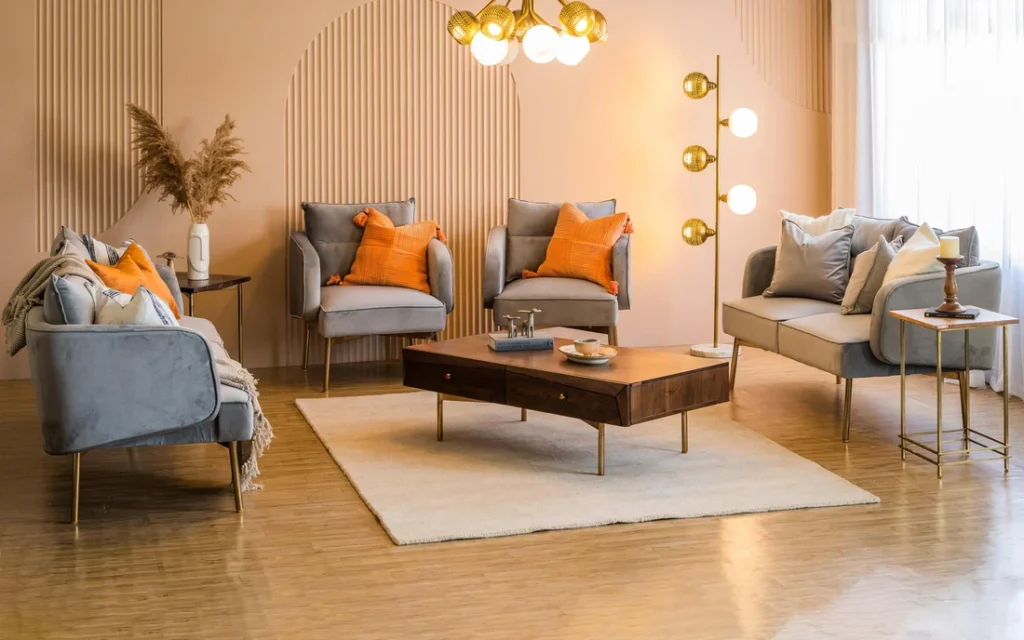
Lighting is often overlooked when people search for how to decorate a large wall in living room spaces.Yet lighting can make a wall treatment feel significantly more intentional.
Picture lights can highlight artwork. Wall sconces can frame a mirror, fireplace, console, or artwork. Architectural lighting can emphasize paneling or built-in shelving.The benefit is that lighting adds both function and decoration.
For example, two sconces positioned symmetrically around a large piece of artwork can create a sophisticated focal point. A picture light above a painting can make the artwork feel like a deliberate architectural feature.If the wall is very tall, upward or vertically oriented lighting can also help connect the lower part of the composition with the ceiling.
Wayfair specifically recommends wall sconces as both functional and decorative additions to large walls, particularly when used to illuminate artwork or darker areas.
When installing new electrical fixtures, use a qualified professional where required and follow local electrical requirements. Decorative decisions should never compromise safety.For additional lighting inspiration, Home Styling Guide’s colorful lamps ideas explores ways to layer lighting across living rooms and other areas of the home.
12. Combine Artwork With a Console or Credenza

Sometimes the best way to decorate a large wall is to combine the wall with the furniture beneath it.A console, credenza, sideboard, or low cabinet can visually anchor the lower portion of the wall while artwork, a mirror, or another statement feature occupies the upper portion.
This combination works particularly well when the wall feels too tall or when a single artwork piece appears disconnected from the rest of the room.
For example, imagine a long neutral wall behind a low wooden console. A large horizontal artwork can sit above the console, while a table lamp, vase, books, or sculptural object provides smaller layers below.The furniture should not be treated as an afterthought. It becomes part of the overall composition.
This is especially important when learning how to decorate a large wall in living room spaces because a wall display can look strangely “floating” if there is no visual relationship between the artwork and the furniture below it.
How to Decorate a Large Wall in Living Room Above a Sofa

The wall behind a sofa is one of the most common places homeowners struggle with.
Start by considering the sofa’s width. A tiny picture centered above a large sectional will usually feel undersized.
Instead, treat your artwork, gallery wall, mirror, or grouped display as one visual unit. The total width of that unit should relate to the sofa rather than to one individual frame.
A horizontal oversized artwork can work beautifully above a long sofa. A gallery wall can provide more personality. A large round mirror can soften a room dominated by rectangular furniture.
The vertical placement matters too. You generally want the artwork close enough to the sofa that the two elements feel connected rather than separated by a large empty gap.
Architectural Digest’s designer guidance similarly recommends thinking about artwork and mirrors as a proportion of the sofa width rather than choosing a size independently.Avoid hanging the artwork so high that it feels disconnected from the furniture.
How to Decorate a Large Wall in Living Room With High Ceilings
Tall walls require a slightly different strategy.If you have ceilings that are significantly higher than standard residential ceilings, horizontal artwork placed too low can leave a large amount of unused vertical space above it.
Vertical artwork, tall shelving, floor-to-ceiling paneling, vertical wood slats, or stacked artwork can help the eye move upward.
However, do not assume that every inch of a tall wall needs to be decorated. Negative space can make the architecture feel more impressive.
A tall wall also gives you an opportunity to use lighting strategically. Vertical sconces, picture lights, or architectural lighting can reinforce the height while preventing the wall from feeling visually flat.
How to Decorate a Large Wall in Living Room on a Budget
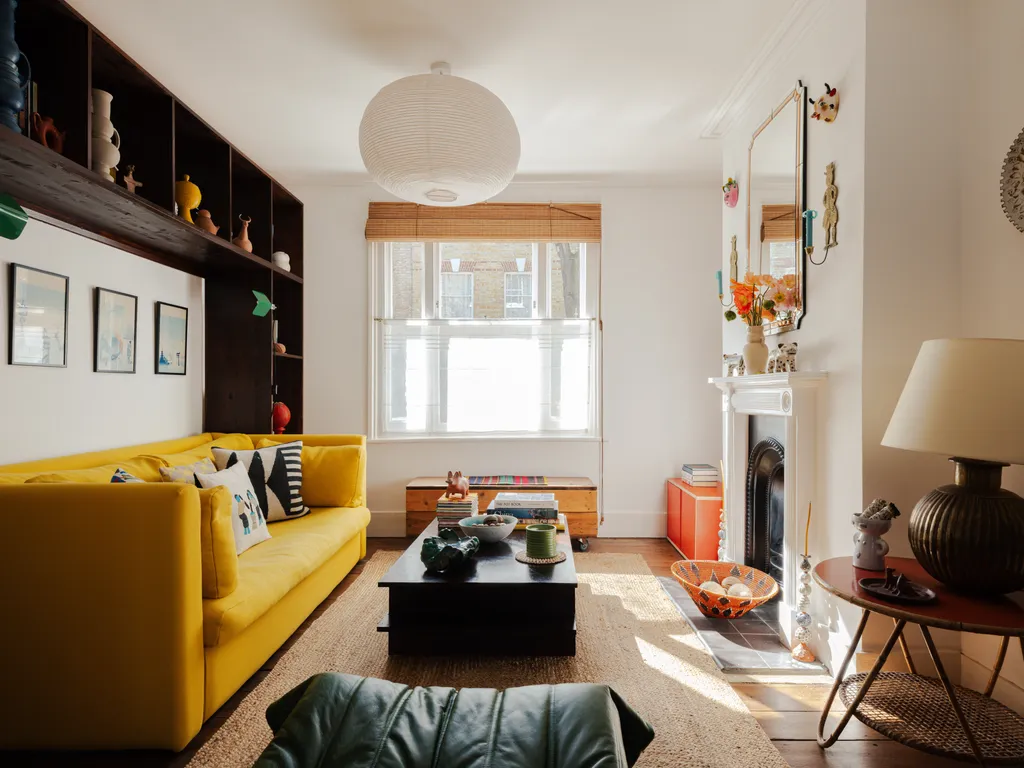
A large wall does not automatically require expensive artwork or custom cabinetry.
One of the most affordable approaches is to create a DIY gallery wall using inexpensive frames and printable artwork. You can also thrift frames and give them a consistent finish so the collection feels intentional.
Paint is another high-impact option. A single gallon of paint can change the character of a large wall far more dramatically than several small accessories.
Floating shelves can also be cost-effective because you can reuse objects you already own. Books, family photographs, small plants, ceramics, and collected pieces can become part of the display.
Another budget-friendly approach is to create your own oversized artwork. A large canvas with simple abstract brushwork, color blocking, or textured materials can become a focal point without the cost of original gallery art.
The key is not to make the wall look expensive by buying more. Make it look intentional through scale, composition, consistency, and restraint.
How to Make a Large Living Room Wall Look Expensive

When learning how to decorate a large wall in living room interiors with a polished appearance, focus on proportion before price.
A correctly sized piece of affordable artwork can look better than an expensive piece that is too small.
Use a limited color palette so the wall relates to the rest of the room. Repeat one or two colors from the sofa, rug, curtains, or accessories.
Frame artwork consistently when possible. If you are mixing frames, make sure there is another element connecting the pieces, such as a shared color, subject, material, or style.
Lighting also makes a major difference. A well-positioned picture light can give even a simple artwork display more presence.
Most importantly, leave some breathing room. A wall does not become more luxurious simply because every available inch has been filled.
Current design guidance continues to emphasize visual restraint and the importance of choosing large-scale pieces that can carry the wall rather than scattering many undersized objects across it.
How to Decorate a Large Wall in Living Room Without Making It Look Cluttered
The easiest way to avoid clutter is to choose one dominant decorating direction.
If you already have a dramatic gallery wall, you probably do not need a giant mirror beside it, multiple shelves, bold wallpaper, and a collection of metal sculptures on the same wall.Instead, choose one main feature and add only supporting details.
For example, a large artwork can be supported by a console and two lamps. A gallery wall can be supported by a simple console below it. Built-in shelving can carry the visual weight by itself.
Color is another important tool. If you use too many unrelated colors, the wall can feel chaotic even when the arrangement is technically balanced.
Texture should also be controlled. Wood, metal, glass, woven textiles, and ceramics can work together, but they should have a clear visual relationship.The goal is not to make the wall look empty. The goal is to make it look edited.
How to Decorate a Large Wall in Living Room Based on Your Style
A modern living room often benefits from one oversized abstract artwork, a large mirror, clean shelving, or architectural paneling.
A traditional living room can use framed landscapes, portraits, symmetrical artwork, picture-frame molding, mirrors, or classic built-ins.An organic modern living room can combine warm wood, neutral artwork, woven textures, natural materials, and soft lighting.
A farmhouse-inspired room can use oversized vintage-inspired artwork, wood accents, simple gallery arrangements, or architectural molding.An eclectic living room gives you more freedom to combine different frames, artwork styles, collected objects, textiles, and colors.
If you are working with a Western-inspired American interior, vintage artwork, landscapes, rustic frames, leather-related tones, and natural wood can work particularly well. Home Styling Guide’s vintage Western home decor guide explores ways to combine wall decor, earthy colors, leather, wood, and collected accessories.
Common Mistakes to Avoid on a Large Living Room Wall
The first mistake is choosing decor that is too small. A 16-by-20-inch print may look beautiful in a hallway but disappear on a very wide living room wall.The second mistake is hanging artwork too high. The display should feel connected to the furniture and the room’s viewing height. the third mistake is filling the wall simply because it is empty. Negative space is an important part of interior design.
The fourth mistake is ignoring the room’s existing focal point. If your fireplace is already the star, your wall treatment should support it rather than compete with it.The fifth mistake is ignoring lighting. Beautiful artwork can look flat if it is poorly illuminated.
The sixth mistake is choosing wall decor without considering the furniture underneath it. The sofa, console, credenza, or fireplace should feel connected to the wall display.
The seventh mistake is buying everything before testing the arrangement. Painter’s tape, paper templates, and floor layouts can save you from expensive mistakes.
A Simple Formula for Decorating a Large Living Room Wall
If you are still unsure how to decorate a large wall in living room spaces, use this simple process.First, measure the wall and identify its main obstacles.Next, identify the furniture or architectural feature that the wall needs to relate to.
Then choose one dominant solution. Decide whether that will be oversized artwork, a gallery wall, mirror, shelving, paneling, wallpaper, lighting, or another approach.
After that, determine the appropriate scale before buying anything.Create a temporary mockup using paper, painter’s tape, or the actual objects if possible.
Step back and view the wall from the main seating position.Finally, add only the supporting elements that improve the composition.This process is more reliable than buying random decorations and hoping they will work together.
Frequently Asked Questions About How to Decorate a Large Wall in Living Room
What should I put on a large living room wall?
The best choice depends on your wall size, furniture, style, and budget. Popular options include oversized artwork, gallery walls, large mirrors, built in shelving, floating shelves, paneling, wallpaper, tapestries, sculptural decor, and accent lighting.
How big should artwork be above a sofa?
A useful starting point is to make the total width of the artwork or artwork grouping around 60% to 75% of the sofa width. This is a proportion guideline rather than a strict rule, so adjust it according to the room’s architecture and surrounding elements.
Is one large painting better than a gallery wall?
Neither is automatically better. One large painting usually creates a cleaner and more minimalist appearance, while a gallery wall offers more personality and flexibility. Choose the option that fits your room’s style and the amount of visual complexity you want.
How do you decorate a very large blank wall?
Start by deciding whether the wall is wide, tall, or both. Wide walls often work well with horizontal artwork, gallery arrangements, shelving, or paneling. Tall walls can benefit from vertical artwork, tall shelving, vertical architectural details, or layered lighting.
How do you decorate a large wall without making it cluttered?
Choose one dominant focal point and avoid scattering many unrelated small objects across the wall. Use a coordinated color palette, maintain negative space, and make sure the wall decor relates to the furniture below it.
Should a large mirror go above a sofa?
A large mirror can work beautifully above a sofa when its size, frame, and shape complement the furniture and room. Consider what the mirror will reflect before installing it.
How can I decorate a large wall on a budget?
Paint, DIY artwork, thrifted frames, printable art, floating shelves, and rearranging existing decor can all create significant visual impact without requiring an expensive renovation.
What is the best wall decor for high ceilings?
Tall artwork, vertical gallery arrangements, floor-to-ceiling shelving, paneling, vertical wood details, and appropriately positioned lighting can help visually connect the floor and ceiling.
Do I have to decorate every wall in my living room?
No. Some walls should remain relatively quiet. Leaving intentional negative space can help the main focal wall stand out and prevent the room from feeling visually crowded.
Final Thoughts
Learning how to decorate a large wall in living room spaces becomes much easier when you stop thinking about the wall as an empty area that needs to be filled.
Instead, think about it as part of the room’s overall visual structure.
Start with the wall’s dimensions. Look at the furniture beneath it. Identify the focal point. Choose a decorating approach that matches the room’s style. Then focus on scale, proportion, color, texture, lighting, and negative space.
If you love a clean and sophisticated interior, an oversized artwork or large mirror may be the right answer. If you want personality, a gallery wall can tell a story. If you need storage, built-in shelving can combine function with design. If the room lacks architectural interest, paneling or wallpaper can transform the wall itself.
The most successful approach to how to decorate a large wall in living room spaces is not necessarily the most expensive one. It is the one that makes the wall feel connected to everything around it.
In 2026, living rooms are increasingly moving toward spaces that feel personal, layered, comfortable, and intentionally designed rather than perfectly matched. Your large wall is an opportunity to express that personality.
Measure first, choose a strong focal point, test the scale, and leave enough breathing room for the design to feel intentional. When those elements work together, a large blank wall can become one of the most memorable features of your living room.
For more living room inspiration, explore Home Styling Guide’s luxury living room design guide and living room furniture guide.