
“Learn how to mix and match bedroom furniture the right way with simple bedroom furniture mix and match tips for styles, colors, and wood tones. Read now!”
If you’ve ever stood in a furniture showroom staring at a “matching bedroom set,” wondering if that’s really the only option it isn’t. Learning how to mix and match bedroom furniture is one of the easiest ways to make your room feel personal, layered, and far more interesting than anything that came in a box together. The old rule that every piece has to match is outdated, and honestly, it never made rooms look better just safer.
The good news is that mixing bedroom furniture doesn’t require an eye for design or a big budget. With a few simple principles picking a dominant style, choosing a color palette, balancing wood tones, and paying attention to scale you can combine a vintage dresser, a modern bed, and nightstands that don’t technically “match” and still end up with a room that feels intentional and cohesive. In this guide, you’ll find practical bedroom furniture mix and match tips for every piece in your room, plus the mistakes to avoid along the way.
Bedroom Furniture Mix and Match Tips That Actually Work
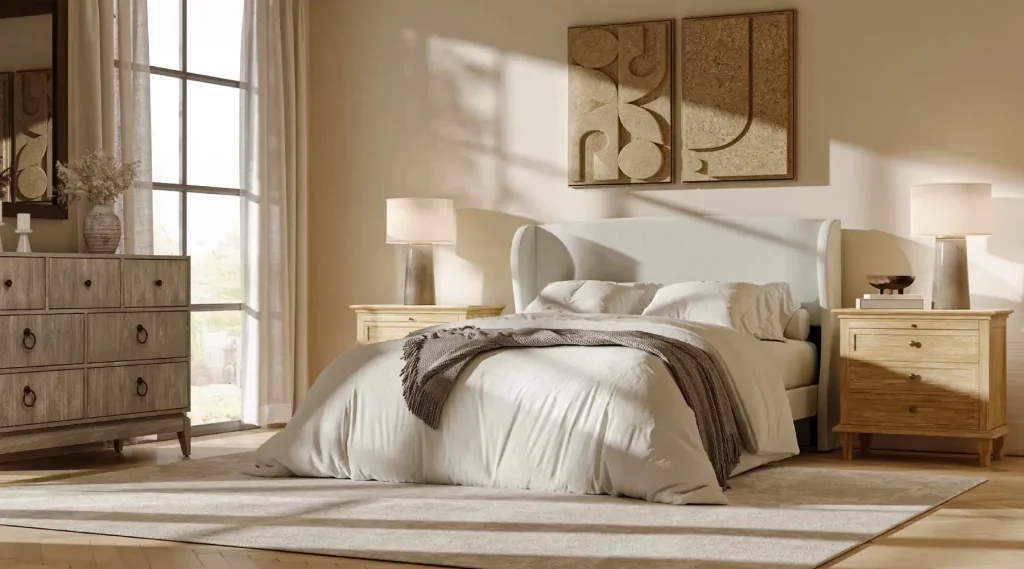
If you have ever stood in a furniture showroom staring at a matching bedroom set and wondering if that is really your only option, it is not. Learning how to approach bedroom furniture mix and match the right way is one of the easiest ways to make a room feel personal, layered, and far more interesting than anything that came packaged together in a box. The old idea that every piece in a bedroom has to match has faded, and honestly, it never really made rooms look better. It just made them feel safer and a little forgettable.
The good news is that mixing bedroom furniture does not require a trained eye or a big budget. With a handful of simple principles, picking a dominant style, choosing a color palette, balancing wood tones, and paying attention to scale, you can combine a vintage dresser, a modern bed, and nightstands that do not technically match, and still end up with a room that feels intentional and cohesive. This guide walks through exactly how to mix and match bedroom furniture piece by piece, along with the mistakes to avoid so your room looks curated instead of accidental.
Why You Don’t Need a Matching Bedroom Set
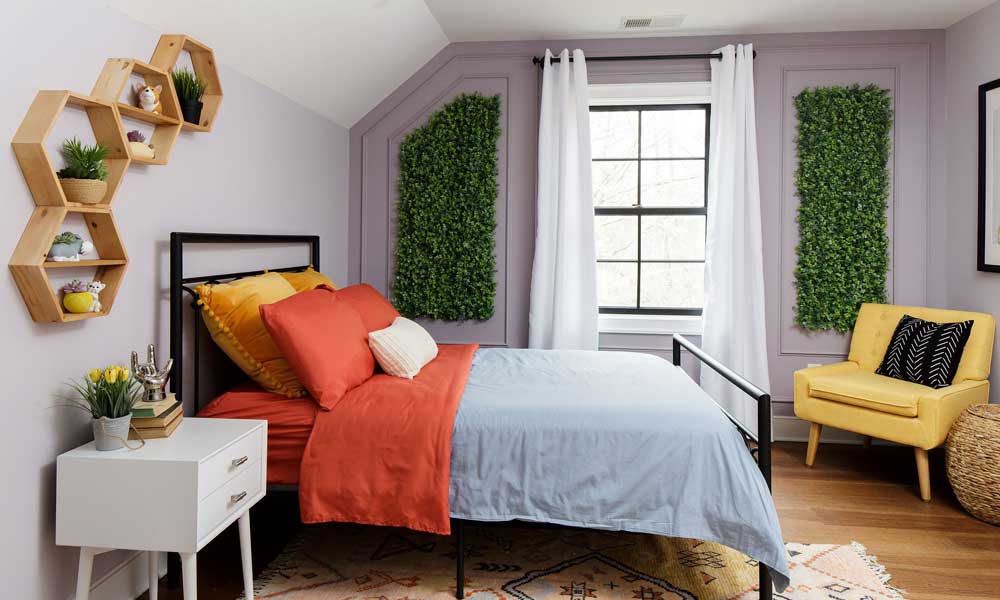
For a long time, buying a full matching bedroom set was simply the default. Furniture stores built entire collections around one bed, one dresser, and two nightstands finished in the same wood and the same style, because it made shopping easy and guaranteed everything would technically go together. There was nothing wrong with that approach, but it also meant a lot of bedrooms ended up looking identical to each other, like they were staged rather than lived in.
Today, more people are choosing to mix and match bedroom furniture instead of buying everything from one collection. Part of this comes from a shift toward personalized interiors, and part of it comes from practicality. When you mix bedroom furniture pieces instead of buying a full set, you get more flexibility to swap one item without replacing everything, more room for character since a mixed room tends to feel layered and real, and more affordability since you can invest in one statement piece and thrift or budget shop the rest.
How to Start Mixing Bedroom Furniture
The easiest way to start mixing bedroom furniture is to avoid replacing everything at once. Begin with the largest piece in the room, usually the bed, and use it to establish the overall direction of your design.
Next, look at the furniture you already own. Instead of asking whether every piece matches, identify what can be connected through color, material, shape, or finish. A modern bed can work with a vintage dresser, for example, if both pieces share a similar wood tone or are balanced by the same accent color.
Choose one dominant style before adding contrasting pieces. Modern, traditional, farmhouse, mid-century, rustic, and contemporary furniture can all be mixed, but having one main style keeps the room from feeling random.
Finally, add pieces gradually. Bring in the nightstands, dresser, bench, seating, lighting, and accessories one at a time and step back to see how each addition affects the overall balance. This approach makes it easier to create a bedroom that feels collected and intentional rather than overly matched or accidentally mismatched.
The Core Rules of Mixing Bedroom Furniture
Before getting into specific furniture pieces, it helps to understand the handful of principles that make a bedroom furniture mix and match approach look intentional rather than random. These four ideas show up again and again among designers and decorators, and once you understand them, you can apply them to almost any bedroom.
Pick One Dominant Style
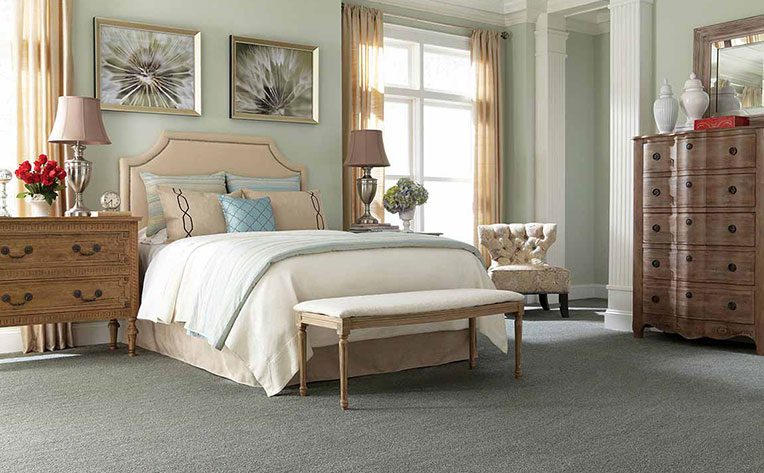
Every successful bedroom furniture mix and match room starts with a dominant direction. This does not mean every piece has to be identical in style, but it does mean one aesthetic, whether that is modern, rustic, coastal, boho, or mid-century, should make up the majority of what is in the room. A reasonable target is having your dominant style represent around sixty to seventy percent of your furniture, with one or two complementary styles filling in the rest.
For example, if your bedroom leans mid century, you could bring in a more traditional headboard or a slightly more contemporary dresser without the room feeling disjointed, as long as the shapes and finishes feel like a deliberate choice rather than a coincidence. The goal of a good bedroom furniture mix and match strategy is not to avoid contrast entirely. It is to make that contrast look planned. Sticking to no more than two or three furniture styles total keeps a mixed bedroom from tipping into visual chaos.
Use the 60-30-10 Color Rule
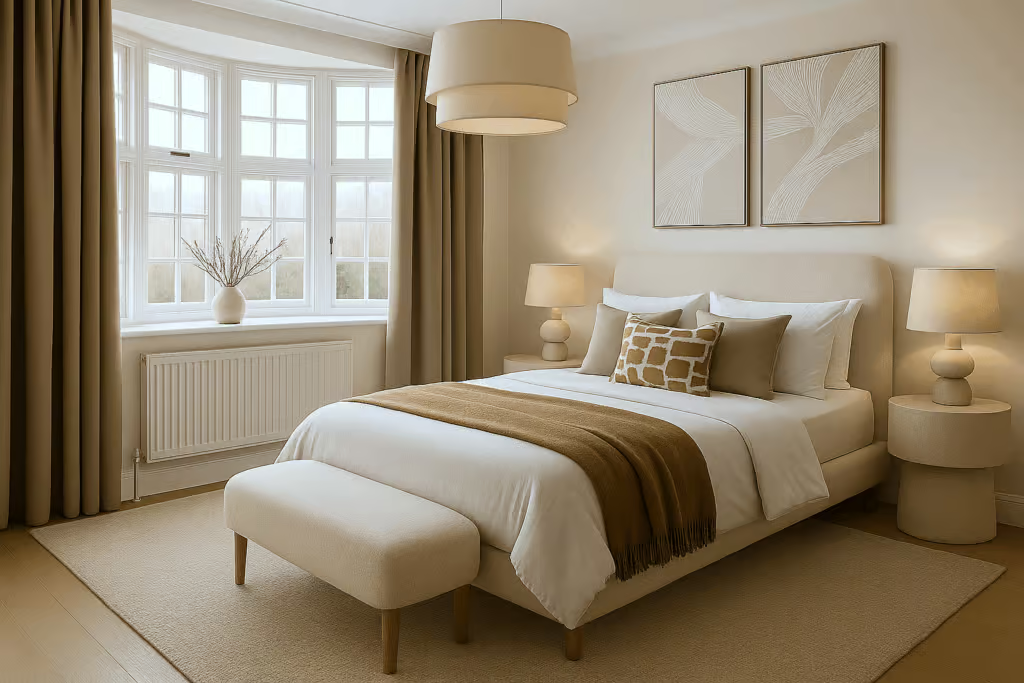
Color is one of the fastest ways to unify a room full of different furniture pieces, and one of the most reliable frameworks for this is the sixty thirty ten rule. In practice, this means about sixty percent of your bedroom’s color palette should come from a neutral base, such as white, cream, beige, or light gray. Thirty percent should be a secondary tone that supports the room without competing with it, and the final ten percent should be reserved for a bolder accent color used sparingly, whether that shows up in a chair, a lamp, or a piece of art.
When you apply this ratio to a bedroom furniture mix and match project, you can have a dresser, bed, and nightstands that are not exactly the same color and still create a bedroom that feels put together, simply because the overall palette stays consistent. Furniture color often matters more than exact matching, which is genuinely freeing once you internalize it.
Mix Materials and Textures Thoughtfully
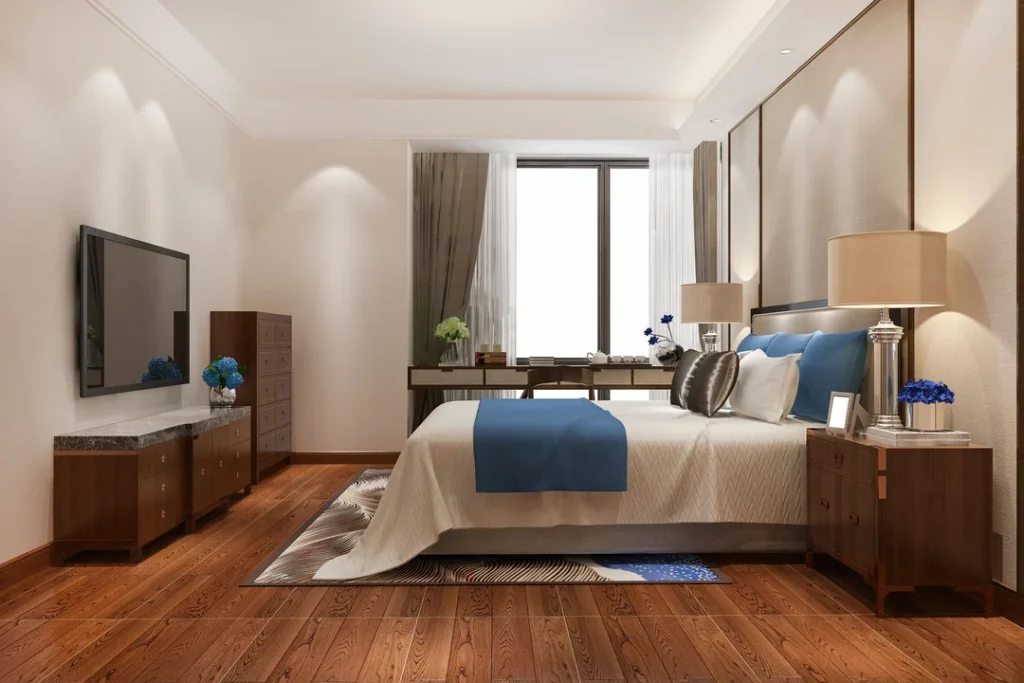
Bedroom furniture generally falls into four broad material categories: wood, painted, metal, and upholstered. Wood tends to lean farmhouse, rustic, or traditional. Painted furniture is flexible and can support anything from mid century modern to boho. Metal furniture reads either glam when it is glossy or industrial when it is matte. Upholstered pieces bring a soft, sometimes romantic feel, and can go maximalist with a bold print.
Relying on only one of these materials throughout a bedroom tends to make the space feel flat, which is part of why a bedroom furniture mix and match approach that blends two or three materials usually looks more finished.
Balance Proportions and Scale
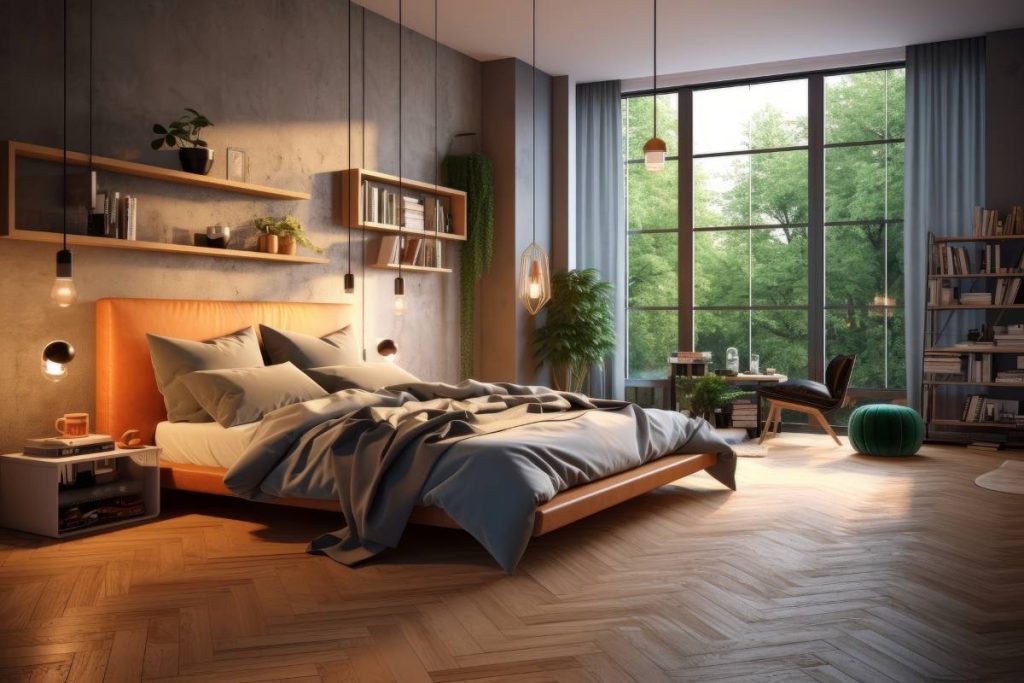
Even when your furniture styles are intentionally different, the scale of each piece needs to feel aligned for the room to work. A dainty nightstand next to a chunky, oversized bed frame will always look off, no matter how well the colors match. Likewise, an enormous dresser can overwhelm a room if nothing else in the space has similar visual weight.
A few quick checks help here. Keep your nightstand height reasonably close to the top of your mattress. Try to match the visual weight of pieces near each other, so sleek, streamlined furniture pairs with other simple shapes rather than something ornate. And if you are using one bold statement piece, keep the surrounding furniture a little simpler so the room does not compete with itself.
Bedroom Furniture Color Combinations That Work Together
When mixing bedroom furniture, the pieces do not have to be the same color. What matters is creating a color relationship that makes the different finishes feel intentional.
Light Wood and White
Light oak, white, cream, and soft beige create an airy combination that works especially well in modern, Scandinavian, and minimalist bedrooms.
Dark Wood and Warm Neutrals
Walnut, espresso, or dark brown furniture can be balanced with beige, cream, taupe, or warm white bedding and walls. This combination creates a bedroom that feels grounded without becoming too dark.
Natural Wood and Black
Natural wood furniture paired with black metal or black-painted accents creates contrast while maintaining a modern look. Use black through nightstand hardware, lighting, mirror frames, or small furniture pieces.
Mixed Wood Tones With Neutral Upholstery
If your room contains more than one wood tone, neutral upholstered furniture can act as a visual bridge. A cream bench, beige headboard, or neutral accent chair can soften the transition between different finishes.
The key is not to find furniture in identical colors. Instead, choose shades that have a clear relationship and repeat each important color at least once or twice throughout the room.
How to Mix and Match Bedroom Furniture by Piece
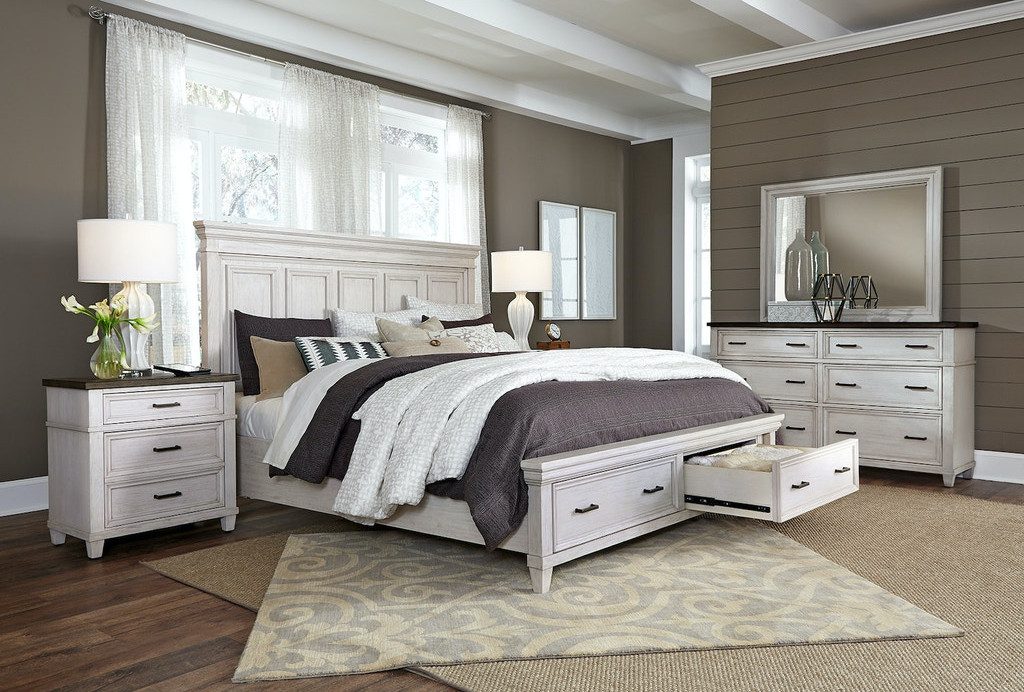
Understanding the core rules is one thing, but applying them to specific furniture pieces is where a bedroom furniture mix and match project actually comes together. Here is how to think through the three main pieces most bedrooms are built around.
Bed and Headboard
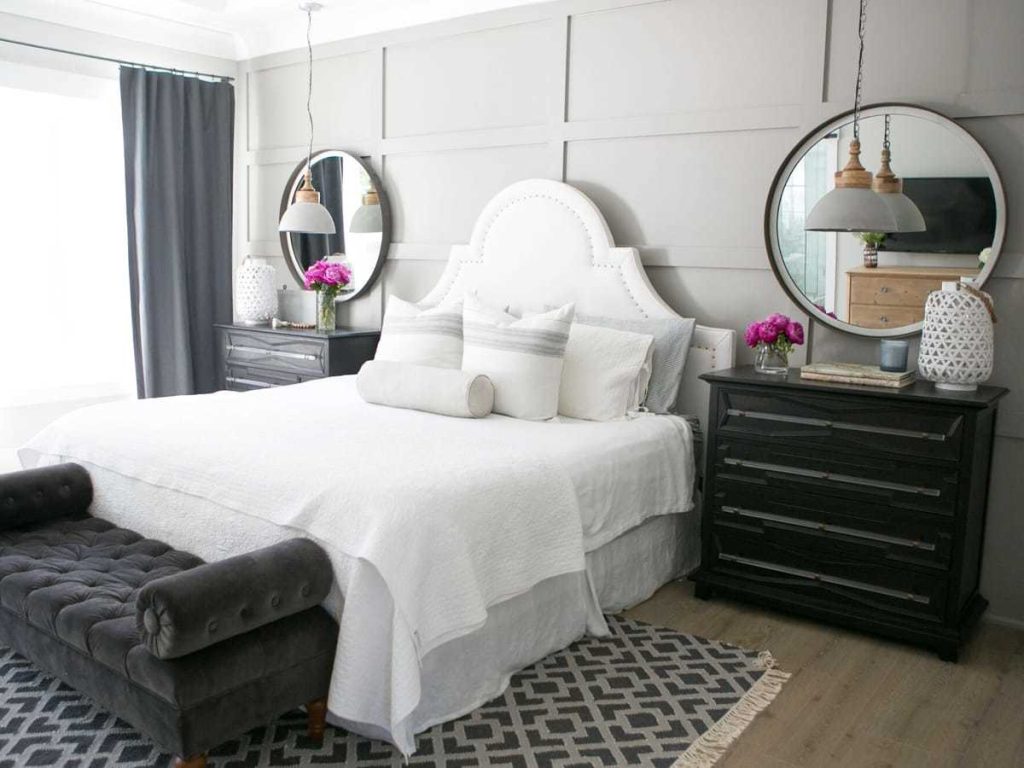
The bed is usually the largest piece of furniture in a bedroom, which makes it the natural starting point for any bedroom furniture mix and match plan. If you want your bed to lead the design, choose a strong silhouette, such as a four-poster frame or a bold upholstered headboard. If your room is on the smaller side, a cleaner, lower-profile bed frame will keep the space feeling airy rather than heavy.
A few pairings tend to work particularly well. A fabric headboard next to a wood dresser creates a nice contrast between soft and structured materials. A wooden bed frame paired with a softer piece, like an upholstered bench at the foot of the bed, balances hard and soft textures. And if you choose a statement upholstered bed, keeping the nightstands simpler lets the bed remain the visual anchor rather than competing with it.
Nightstands
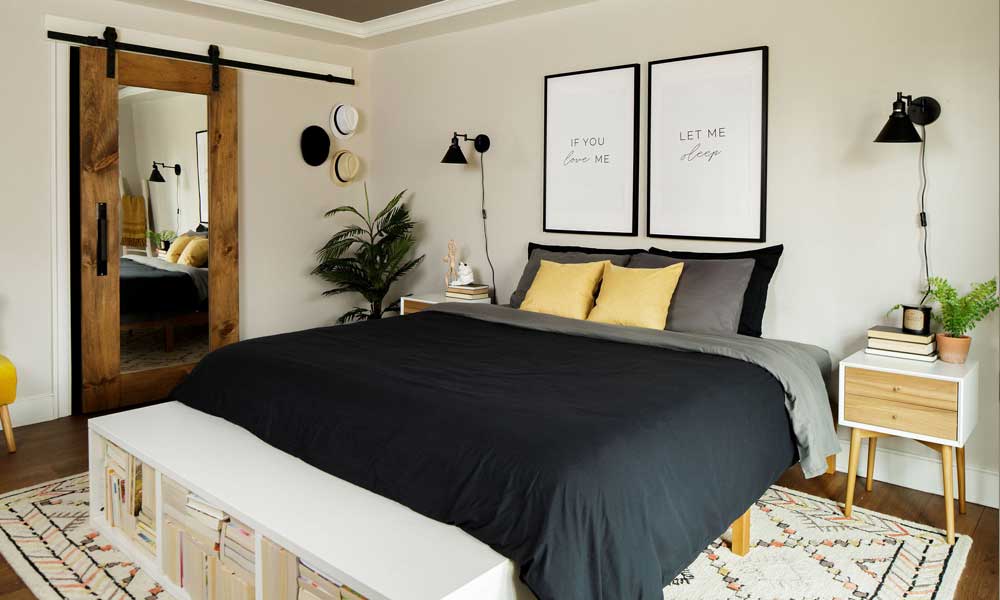
One of the biggest hesitations people have about a bedroom furniture mix and match approach is whether their nightstands need to match. They do not, and using two different nightstands can still look high end as long as scale and function stay consistent. That means keeping a similar height, a similar surface area, and comparable storage between the two, even if their finishes or styles differ.
If you are new to mixing, a good middle ground is to keep the nightstands themselves fairly simple and let a different piece in the room, like the dresser, carry more personality. If you do want non-matching nightstands, repeating one small element, such as the same metal hardware or a similar leg shape, is often enough to visually tie them together.
Dresser and Chest
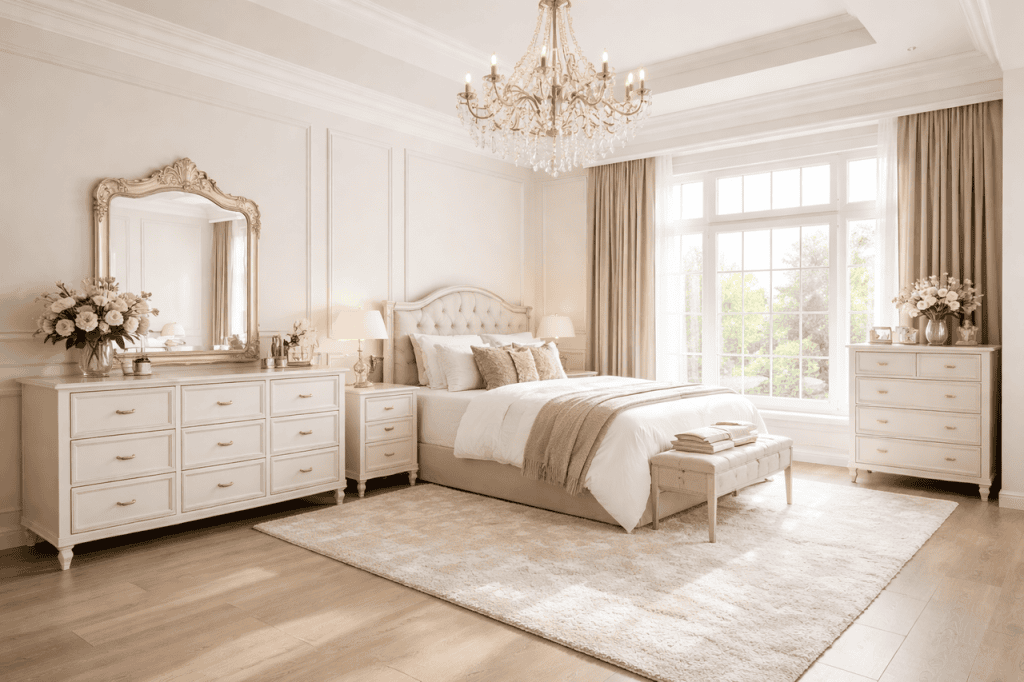
A dresser is one of the most effective ways to bring personality into a bedroom furniture mix and match plan, mostly because it takes up a large amount of visual space. If you have a modern bed and come across a vintage chest of drawers you love, that contrast can genuinely elevate the room rather than clash with it.
To balance old and new successfully, let the dresser act as the character piece in the room and keep the furniture around it calmer. Updating the hardware on an older dresser is a simple, affordable way to give it a refresh that fits your current palette. If the shape of a piece is great but the finish feels dated, repainting it is often easier than replacing it entirely.
How to Mix Bedroom Seating With Different Furniture
A bedroom bench, accent chair, or small seating area does not need to match the bed or dresser. In fact, seating can be one of the easiest places to introduce a different material, color, or furniture style.
For example, an upholstered bench can soften a bedroom with several wooden furniture pieces. A leather or woven accent chair can add texture to a modern bedroom without requiring the rest of the furniture to change.
When choosing seating, pay attention to scale first. A large bedroom can handle a substantial bench or lounge chair, while a smaller room usually works better with a compact chair or narrow bench.
Use color to connect the seating with the rest of the room. The chair or bench does not need to be the same color as the furniture, but its upholstery can repeat a shade already used in the bedding, rug, curtains, or artwork.
This creates contrast without making the seating look like it belongs in a completely different room.
Mixing Wood Tones and Wood Grains the Right Way
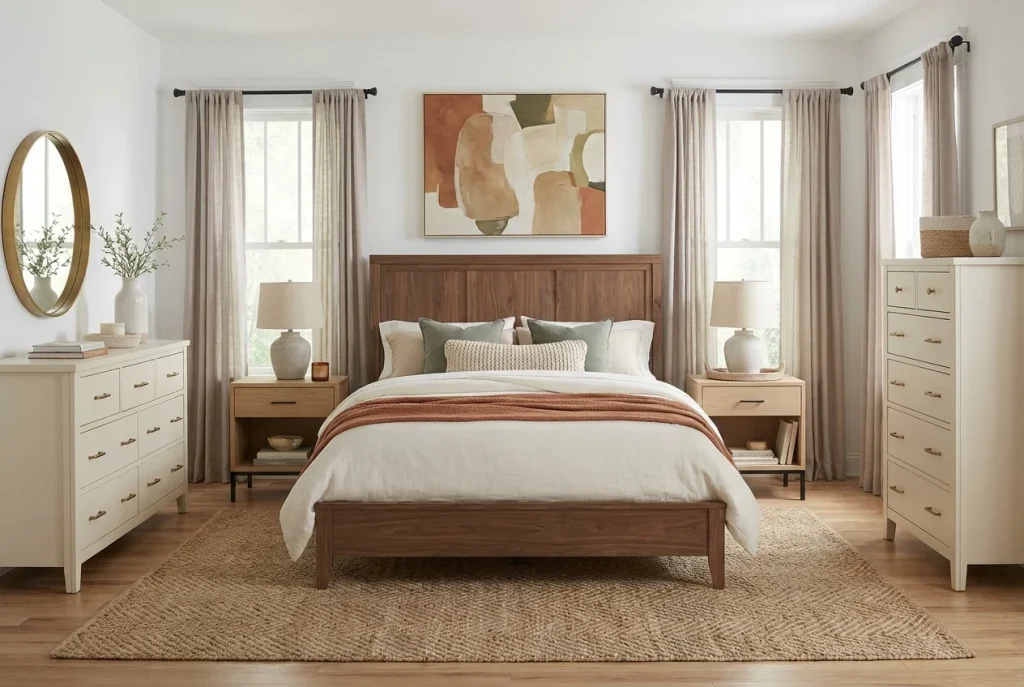
Wood is often the trickiest part of any bedroom furniture mix and match project, mainly because it involves both color and texture at the same time. There is a distinction worth understanding here that many guides skip over, and it is the difference between wood tone and wood grain. Tone refers to how light or dark, warm or cool a piece of wood appears.
Two pieces of furniture can share a similar tone and still clash if their grain patterns are dramatically different, because busy, competing grain patterns pull the eye in two directions at once. A more reliable approach is to mix stains rather than mixing wood species entirely. If you keep the underlying wood species relatively consistent while varying the stain or finish, the room tends to feel more cohesive even when the tones themselves differ.
A simple framework for wood tone mixing is to choose one dominant wood tone for your largest piece, usually the bed, then add one supporting wood tone that leans either lighter or warmer than your dominant choice. From there, repeat that supporting tone in smaller ways throughout the room, such as through a mirror frame, a small side table, or a bench.
What Can Mismatch and What Should Stay Consistent
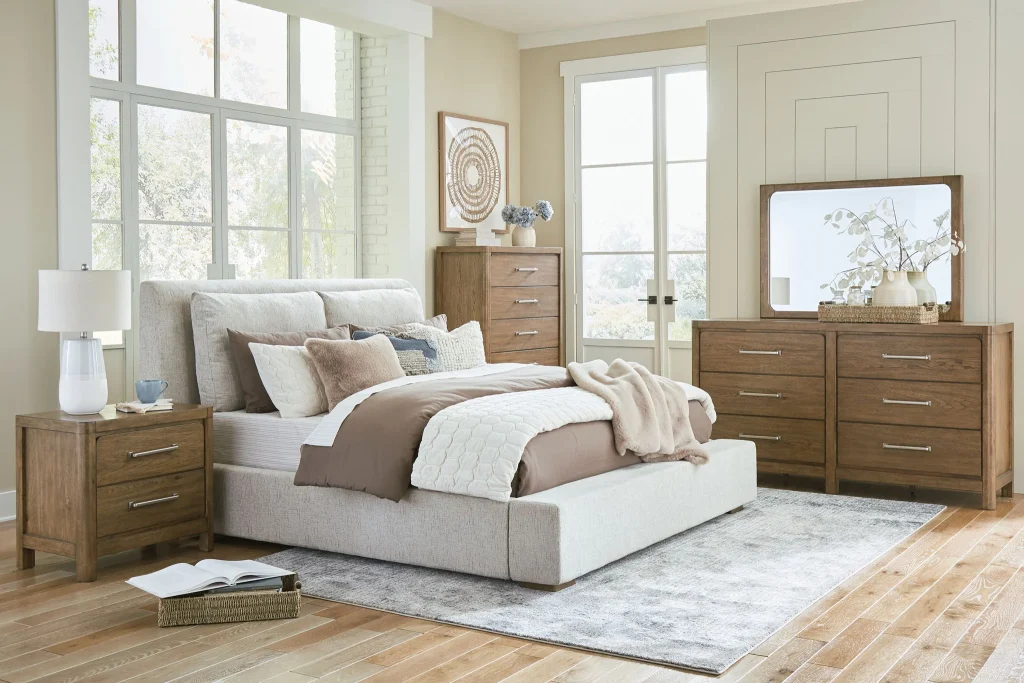
A helpful way to think about any bedroom furniture mix and match project is to separate what is allowed to differ from what benefits from staying consistent. Color and exact finish are the most forgiving elements. Two nightstands, for instance, can be entirely different colors and still work as long as their height and scale feel intentional.
On the other hand, a few things genuinely benefit from repetition. Hardware finish, such as brass, black, or brushed nickel, is one of the easiest unifying details, and repeating the same metal across drawer pulls, lighting, and mirror frames does a lot of quiet work to tie a mismatched room together. Scale is another element that should stay reasonably consistent between pieces that sit near each other, since a large gap in size tends to look accidental rather than styled.
Mixing on a Budget: What to Splurge On and What to Thrift
One of the underrated advantages of a bedroom furniture mix and match approach is how much more budget friendly it can be compared to buying a full matching set. Since you are not locked into purchasing everything from one collection at once, you can invest in the piece that matters most and shop more casually for everything else.
Most decorators recommend splurging on your bed, since it is the largest piece and the one your eye lands on first. A well-made bed frame or headboard sets the tone for the entire room and is worth the higher price point.
This approach also means you are not paying full price for an entire matching set upfront. Instead, you can shop your own home first, repurposing pieces from other rooms or storage, then fill in gaps gradually as you find pieces you genuinely love. A bedroom built this way tends to feel more collected and more valuable over time, rather than looking dated the moment furniture trends shift again.
Mixing Furniture in a Small Bedroom
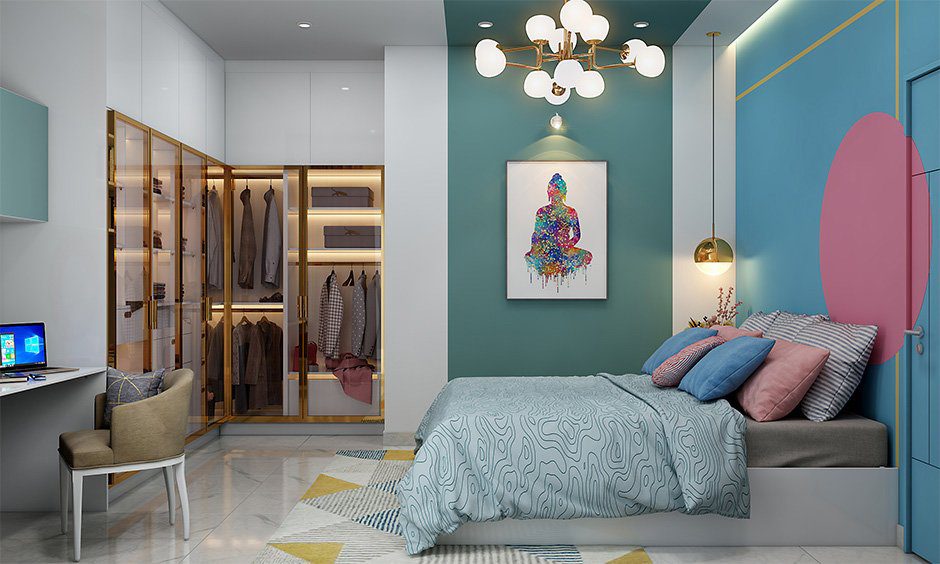
A bedroom furniture mix and match strategy works just as well in a small room, but scale becomes even more important to get right. In a compact space, oversized statement pieces can quickly overwhelm the room, so it is worth prioritizing furniture with a lighter visual footprint, such as pieces with slimmer legs or open bases that let more floor visible underneath.
In a small bedroom, it also helps to limit your mix to two materials rather than three, since a tighter palette reads as more intentional in a confined space. Keeping your nightstands close in scale to each other, even if their finishes differ, prevents the room from feeling lopsided.
And because there is less room for a variety of statement pieces, choosing just one, usually the bed, and keeping everything else simpler helps the space stay calm rather than busy. A bedroom furniture mix and match approach in a small room rewards restraint more than a larger bedroom would.
How to Arrange Mixed Bedroom Furniture for Better Flow
Mixing different furniture styles works best when the room still has a clear and functional layout. Even beautiful pieces can look disconnected if they are positioned without considering movement and visual balance.
Start by placing the bed first because it usually determines the rest of the bedroom layout. Position the nightstands where they are easy to reach and keep enough clearance around the bed for comfortable movement.
Next, place the dresser where drawers and doors can open fully without blocking the main walking path. If you are adding a bench, leave enough space at the foot of the bed to move around it comfortably.
Try to distribute visual weight across the room. If one side contains a large dark dresser, balance it with a substantial mirror, chair, artwork, or another visually noticeable element on the opposite side.
The goal is to make different furniture pieces feel connected through their placement. Good spacing and clear walking paths can make a mixed furniture collection look much more intentional.
Common Mistakes to Avoid When Mixing Bedroom Furniture
Even with the right principles in mind, there are a handful of mistakes that consistently derail a bedroom furniture mix and match project. The first is going too random without any plan. Mixing furniture is not the same as choosing pieces with no shared thread between them. Without at least one repeated element, whether that is color, material, or shape, a mixed room can start to feel disjointed instead of curated.
The second common mistake is clashing styles without a contrast strategy. There is a real difference between intentional contrast and pieces that simply conflict. If you are combining two different styles, make sure something repeats across the room to connect them.
The third mistake is ignoring layout and flow. Even a beautifully mixed set of furniture falls apart if the room feels cramped or awkward to move through, so leaving enough walking space and keeping drawers accessible matters just as much as the styling itself.
The fourth mistake is overcommitting to old matching rules out of habit, when in reality a room with a few intentionally different pieces often looks more considered than one where everything came from the same collection.
Finally, many people bring in too many styles at once. Sticking to two or three styles maximum, as mentioned earlier, keeps a bedroom furniture mix and match room from tipping into visual confusion.
When Should You Replace Instead of Mix and Match Bedroom Furniture?
Mixing bedroom furniture can save money, but not every piece needs to be kept. Sometimes replacing one item is more effective than trying to make several unrelated pieces work together.
Consider replacing a piece when its size is completely wrong for the room, its condition is poor, or its style creates a strong visual conflict that cannot be balanced with other elements.
For example, an oversized dresser can make a small bedroom feel cramped even if its color matches the rest of the furniture. Similarly, a very ornate bed may compete with several minimalist pieces if there is no repeated detail connecting the styles.
You should also consider replacing furniture that no longer serves a practical purpose. A nightstand with no useful storage or a dresser that makes everyday movement difficult may not be worth keeping simply because it technically fits the room.
Before buying anything new, identify the one piece causing the biggest problem. Replacing one dominant item can often improve the entire bedroom more effectively than purchasing several smaller accessories.
Frequently Asked Questions
Can you mix and match bedroom furniture, or does it need to be a set?
Yes, you can absolutely mix and match bedroom furniture. As long as you keep a consistent color palette, repeat at least one shared detail like hardware or wood tone, and pay attention to scale, mismatched pieces can look just as polished as a matching set, often more so.
Is it okay for nightstands to be completely different from each other?
Yes, non-matching nightstands work well as long as they are similar in height and storage function. Repeating one small detail, such as the same drawer pulls or a shared color, helps tie them together even when their overall design differs.
How many furniture styles is too many in one bedroom?
Most designers recommend sticking to two or three styles at most within a bedroom furniture mix and match project. Beyond that, a room tends to start feeling like a showroom floor rather than a cohesive, personal space.
Can you mix different wood tones in a bedroom?
Yes, mixing wood tones is common and often adds depth to a room. The key is choosing one dominant tone for your largest piece and treating any additional tones as supporting accents, while being mindful that wood grain patterns, not just color, can clash if they are too different from each other.
Does the dresser need to match the bed frame?
No, a dresser does not need to match the bed. In fact, pairing a modern bed with a vintage dresser, or the reverse, is one of the more popular ways to add character to a bedroom furniture mix and match room, as long as one shared element, like hardware finish or tone, connects the two.
Final Thoughts
At the end of the day, a well designed bedroom is not about finding furniture that matches perfectly. It is about building a space with a plan behind it. A thoughtful bedroom furniture mix and match approach, one built around a dominant style, a consistent color palette, balanced materials, and careful attention to scale, will almost always feel more personal and more lived in than a room furnished entirely from one matching collection.
Give yourself permission to experiment, swap pieces as your taste evolves, and build the room gradually instead of all at once. For more home decor guidance on building a bedroom that feels styled without feeling stiff, you can explore more ideas on Decorove, where we cover everything from color palettes to furniture styling for every room in the house. For additional inspiration on step by step furniture pairing, Wayfair’s guide on mixing and matching bedroom furniture is also a solid reference point.




Pure perfection